- I feel I have a good handle on the kata. There isn't an issue with knowing what to do. But I could use a little more practice with nanahonme. My main fear is falling over myself if I am stuck with the shidachi position as evidenced with practice a few weeks ago. The floor was very slippery, but you never know. Better safe than sorry.
- I need to put more thought into my fighting. During general practice, it's pretty simple to achieve as the stress levels are much lower and different compared to a shiai or shinsa. So I really need to get to the point of being able to look for openings and respond to attacks to the point where I am constantly in control of myself and the fight. Various people have told me this, so I know this is probably something they will really be looking for when it's my turn to go.
- While I need to work on being more calm, I also feel I should have a better handle of balancing that with aggressiveness. I can't just stand there and wait for the person to attack me, I need to actively try to make them attack and even launch one or two of my own attacks once I see something. I also need to be able to move forward to make sure I get the hit, but make it difficult for the other person to hit as well. Of course, I can't really be too aggressive to the point where I'm just attacking and hoping that I can hit something. I've been dinged for that many times before so I should know all too well about that.
Saturday, February 27, 2010
Countdown to Nidan Exam
I have sent in my shinsa application, so now everything is set for me to take the nidan exam in a few weeks. I had been thinking about this moment for the past year since I got my shodan, and doing what I could to make sure I was ready for it once the day finally arrived. If I were taking this test tomorrow, I'm honestly not too sure how well I'd do. On one hand, I feel like I've got a handle on the copious amounts of advice I have been given for the past year. But, on the other hand, putting them into practice is a different thing while under various amounts and types of stress. In the end, I think that, as long as I can keep my mind calm, I would be able to give my best performance to show that I am ready for the next rank. But, as with anything in life, my best could always be better. The following is a short rundown of the major things I feel I need to work on.


Sunday, January 24, 2010
Kendo Kata research - Introduction
I can admit, Kendo kata can be boring. But, no matter how I feel about the kata, they must be done anyways in order for us to advance through the rankings. I was one of those people that treated kata as a necessary thing to do before the promotional exams to make sure I don’t make any glaring mistakes come test time. Whenever I do them, it turns out to be no more than doing X, Y and Z in order to get from point A to point B.
I’ve started to think a bit more about how I can approach Kendo kata a little differently. Part of it is my newfound uptake and interest in Iaido, where we tend to go much deeper into the techniques and reasons behind each of the katas’ moves and the other part is just a drive to understand whatever I am doing a little better, which just happens to be part of my inquisitive personality. Essentially, I may know how to do all the moves, but I would also like to know why I am doing those moves. In order to achieve that, there are a few things I’d like to look at.
I’ve started to think a bit more about how I can approach Kendo kata a little differently. Part of it is my newfound uptake and interest in Iaido, where we tend to go much deeper into the techniques and reasons behind each of the katas’ moves and the other part is just a drive to understand whatever I am doing a little better, which just happens to be part of my inquisitive personality. Essentially, I may know how to do all the moves, but I would also like to know why I am doing those moves. In order to achieve that, there are a few things I’d like to look at.
- I would like to know some things about when the kata were developed, how they were developed and why they were developed. Understanding where things come from can help with better appreciating what it is one is doing.
- I have learned that the roles we do mean something and the kamae we take means something. Thus, I’d like to take the positions and roles we take and put some meaning behind the moves we do by examining each of the kata with the information learned from the background info.
Friday, January 15, 2010
Trying Jodan
For the last few practices, I thought I would try out Jodan no kamae for a little bit. For those not in the know, Jodan no kamae is one of the three main kamae used in Kendo with the other two being Chudan (the most basic and widely used) and nito (using a shoto and daito simultaneously).
I wanted to try it for three main reasons:
In the short time I've used it, I've learned quite a bit. On the top level, I had a lot of fun using it once I got into a decent mindset. Going deeper, I learned some stuff about myself and how I am able to improve my overall Kendo. I was able to try it out against a good amount of people so there were more experiences to add onto what I have already learned. That can be read as I got my ass kicked a lot, but that really doesn't matter to me since I only just started experimenting with it.
At this point, it's way too early to see where I could be going with this. As of now, the main reason for using Jodan is to be able to find out a lot about the kamae and myself. The required mindset in order to be successful with it is totally different from Chudan, but also the same. What I mean is that, while I need to be more aggressive due to the open targets, the planning that is required to do well when fighting against someone is the same. Anything beyond that concerning me and my Jodan future is out of scope for the time being.
I wanted to try it for three main reasons:
- Learning alternate kamae - Well, the stance is there, so why not try to use it? I love Kendo enough to explore whatever avenue is open to me for improvement and this is just another path that is open for me to take. There is an experimental bug in my consciousness that sometimes might get the best of me.
- Defeating the kamae - Whenever I face against someone who is doing jodan, I oftentimes freeze into confusion as I start to really think about what needs to be done to be victorious. In the end, all it did was slow me down and made my defenses and offenses very innefective for fighting. The easiest way to learn about fighting against jodan is to just keep fighting against people that use it. Eventually, you learn about the kamae you should take, the targets that are open and the capabilities of that opponent. But I believe that the missing element is actually learning of the capabilities of that kamae yourself by really experiences the positives and negatives through personal experience to take with you when you eventually face someone using it.
- Helping with assertiveness - I tend to hesitate a lot in Kendo with doing chuudan. At first, I thought that I would need to really work on my aggressiveness through chuudan before I moved on, but then I recently had the idea to use it as a vehicle to really learn about aggressiveness out of necessity through jodan. Jodan no kamae is known as the kamae of fire. The mindset for this one is to have that feeling of taking over the other person as a flame can easily take over anything that's flammable. Also, you have to be aggressive with it because the left kote, dou and tsuki are wide open for the taking. Worrying about defense isn't much of an option with this stance.
In the short time I've used it, I've learned quite a bit. On the top level, I had a lot of fun using it once I got into a decent mindset. Going deeper, I learned some stuff about myself and how I am able to improve my overall Kendo. I was able to try it out against a good amount of people so there were more experiences to add onto what I have already learned. That can be read as I got my ass kicked a lot, but that really doesn't matter to me since I only just started experimenting with it.
At this point, it's way too early to see where I could be going with this. As of now, the main reason for using Jodan is to be able to find out a lot about the kamae and myself. The required mindset in order to be successful with it is totally different from Chudan, but also the same. What I mean is that, while I need to be more aggressive due to the open targets, the planning that is required to do well when fighting against someone is the same. Anything beyond that concerning me and my Jodan future is out of scope for the time being.
Monday, December 14, 2009
Yearly Introspection
The final days of the year are approaching us. That means it's time for us to close out the year with reflection over how this year was spent and look ahead at the next year to see how we would like to approach it, given past events and lessons learned over all of our lives.
I thought I would try to approach this differently than in the past. I choose a word or phrase that best summarizes my experiences in Kendo and Iaido over the past year, and choose another word or phrase to summarize my goals for the following year. Then I justify each word or phrase.
Kendo
This year's word: Planning
One thing that I needed to do more of is to put a little more thought into my fighting. Beforehand, my habit was to mindlessly attack something with little to no planning. More often than not, it just resulted in me getting tired and not really gaining much in the end.
In order to move on to the next level, I need to begin using more seme to create openings and attack any weaknesses my opponent might show. I save energy and it allows me to mold my fighting style as I read the opponent's style. For the most part, I am understanding all the suggestions I am being told as I am reaping the benefits of doing so. Obviously, I have a long way to go to master that as there are many holes that need to be filled.
Next year's word: Resolve
Despite beginning to know about the benefits of using seme, most of it would be for naught if I don't have the resolve to beat the opponent. Oftentimes, I am distracted by the shinai in front of me and the many potential outcomes of any attempted strikes. Any sort of distraction will only diminish my attacks. I really need to do a lot of fixing on myself if I want to increase my chances of defeating the opponent.
I am going to try to get my nidan in March as well. Everyone remarks on how I have good basics, now I need to translate all that to performing well in front of a random opponent and a group of five people trying to grade me. I have failed the shodan test before because of incessant attacking, so hopefully I should be okay if I increase my resolve and institute planning to my Kendo.
Iaido
This year's word: Technique
Since I've only recently begun Iaido, I have mainly been concentrating on the physical aspects of performing all the seitei kata. The first hurdle was memorizing all of the moves. Once I got that down, then it was all about performing all of my swings more efficiently to make them look and feel better. There was a small bump in the road around August when my new iaito came in. Since it was bigger and heavier, there were some new aspects of swinging that I needed to get used to. As of now, I'm slowly getting it as my body is getting used to handling something that heavy.
Next year's word: Intent
Once the basic moves are taken care of, the next part is understanding everything that I am doing. Without that, then I would just be swinging around a sword with no meaning, which gets boring really quickly. Every kata has a bunkai, or intent, that gives all of your moves some sort of meaning. Whether I am supposed to be in a thin hall or taking down a few people, I am supposed to perform as if I was actually in that situation. Of course, it means I need to use a lot of my imagination and, when there are multiple things that are already going on in your head, there isn't room for much else.
I would also like to try to test for Iaido when I get the chance. The issue now is that I need to know when the next available test is. Because I don't have a rank, getting a grade of some sort should be relatively easy. What grade I get is a matter of the judges and the grading culture of the region I will be testing in. Either way, I will be trying hard to make sure there is some intent in all of my kata to make sharper swings, effective nukitsuke and accurate noto.
Obviously, I don't know what the future holds. The chosen goals are based on advice given to me and my introspection throughout the year. If I do get sidetracked for whatever reason, I hope it's for some other important element for improvement instead of just coasting through practice for the sake of it (though sometimes that may not be a bad idea if things get too frazzled). No matter the outcome, I hope I can approach each practice with something I can improve on to make my Kendo and Iaido better, little by little.
I thought I would try to approach this differently than in the past. I choose a word or phrase that best summarizes my experiences in Kendo and Iaido over the past year, and choose another word or phrase to summarize my goals for the following year. Then I justify each word or phrase.
Kendo
This year's word: Planning
One thing that I needed to do more of is to put a little more thought into my fighting. Beforehand, my habit was to mindlessly attack something with little to no planning. More often than not, it just resulted in me getting tired and not really gaining much in the end.
In order to move on to the next level, I need to begin using more seme to create openings and attack any weaknesses my opponent might show. I save energy and it allows me to mold my fighting style as I read the opponent's style. For the most part, I am understanding all the suggestions I am being told as I am reaping the benefits of doing so. Obviously, I have a long way to go to master that as there are many holes that need to be filled.
Next year's word: Resolve
Despite beginning to know about the benefits of using seme, most of it would be for naught if I don't have the resolve to beat the opponent. Oftentimes, I am distracted by the shinai in front of me and the many potential outcomes of any attempted strikes. Any sort of distraction will only diminish my attacks. I really need to do a lot of fixing on myself if I want to increase my chances of defeating the opponent.
I am going to try to get my nidan in March as well. Everyone remarks on how I have good basics, now I need to translate all that to performing well in front of a random opponent and a group of five people trying to grade me. I have failed the shodan test before because of incessant attacking, so hopefully I should be okay if I increase my resolve and institute planning to my Kendo.
Iaido
This year's word: Technique
Since I've only recently begun Iaido, I have mainly been concentrating on the physical aspects of performing all the seitei kata. The first hurdle was memorizing all of the moves. Once I got that down, then it was all about performing all of my swings more efficiently to make them look and feel better. There was a small bump in the road around August when my new iaito came in. Since it was bigger and heavier, there were some new aspects of swinging that I needed to get used to. As of now, I'm slowly getting it as my body is getting used to handling something that heavy.
Next year's word: Intent
Once the basic moves are taken care of, the next part is understanding everything that I am doing. Without that, then I would just be swinging around a sword with no meaning, which gets boring really quickly. Every kata has a bunkai, or intent, that gives all of your moves some sort of meaning. Whether I am supposed to be in a thin hall or taking down a few people, I am supposed to perform as if I was actually in that situation. Of course, it means I need to use a lot of my imagination and, when there are multiple things that are already going on in your head, there isn't room for much else.
I would also like to try to test for Iaido when I get the chance. The issue now is that I need to know when the next available test is. Because I don't have a rank, getting a grade of some sort should be relatively easy. What grade I get is a matter of the judges and the grading culture of the region I will be testing in. Either way, I will be trying hard to make sure there is some intent in all of my kata to make sharper swings, effective nukitsuke and accurate noto.
Obviously, I don't know what the future holds. The chosen goals are based on advice given to me and my introspection throughout the year. If I do get sidetracked for whatever reason, I hope it's for some other important element for improvement instead of just coasting through practice for the sake of it (though sometimes that may not be a bad idea if things get too frazzled). No matter the outcome, I hope I can approach each practice with something I can improve on to make my Kendo and Iaido better, little by little.
Sunday, October 18, 2009
About Dehydration
Kendo practice last weekend was a special one. Some people from Indianapolis stopped by to have a joint practice that made the dojo very packed and very active. While the practice was tough and devoid of air circulation, it wasn't the most brutal practice I've had. Unfortunately, I made some poor choices and really paid for it when I got home and for the rest of the weekend.
In the hours of the morning, I usually eat a good breakfast and hydrate myself pretty well as I know that, no matter who is teaching that day, I will be expected to work hard. But, this particular morning, I didn't drink as much water as I should have. And while I was able to survive on that, I also went across the street to have some beer with the dojo folk like I always do. Getting home was fine, though I was getting a little sleepy on the way. But when I got home, things took a turn for the worse. Going up the stairs was a task that was more daunting than usual. I live on the third floor in my complex, so that only multiplied the heavy work. At the top, my head was pounding very hard as I unlocked the door. As I got in, I stumbled around as I took my shoes and Kendo equipment that was strapped to my back. I just spent the rest of the night relaxing and tried to take a nap with very little success. There was also the strange feeling on my skin that was almost prickly and felt consistently cold (later found to have a fever that was 100.3 at the time). When the night was over, I took a Tylenol and went to bed to go to Iaido practice. The next morning, I felt very cold and stiff (even for that dojo), but was able to muster once I got moving, but had to sit out most of Kendo when I had difficulty breathing and generally not feeling well.
The story ends up in a good way, though. When I got home from the Kendo/Iaido practice of the following day, I finally put two and two together and thought about the possibility of dehydration. My symptoms kind of matched what I had when I was dehydrated the last time and what I saw on the Mayo Clinic website. Once I started drinking more water and rested some more, I started feeling better as the day went on. In my case, I was lucky, but it really could have turned out much worse. So, with this post, I would like to highlight the subject of dehydration, what to look for and what to do about it if you happen to fall under this condition.
When I got home, I had a pounding headache and felt pretty dizzy as I stumbled into my apartment complex to take off my shoes and heavy Kendo equipment on my back. On top of that, my skin felt kind of sensitive and still felt kind of chilly despite how warm I made my apartment with the central and space heater. The following afternoon, I took my temperature and it clocked in at 100.3 F.
Dehydration is the condition when your body doesn't have enough water to sustain itself. As most of us already know, the human body is 75% water and pretty sensitive to any changes to body condition that it might not be able to handle well. In normal conditions, the water allows your blood to flow easier to carry nutrients throughout the body, including the oxygen we all need to breathe. The body also gains some lubrication to allow for proper movement of body parts and satisfactory functioning of the organs. Once you pull water out of the equation, the body can't operate as efficiently and has to work harder to compensate for the lack of sufficient water.
There is a large list of symptoms to look for to see if you are dehydrated. They include:
The good thing about dehydration is that it's very easy to prevent and treat. To prevent it, just drink enough liquid like water or sports drinks beforehand. During practice, listen to your body and take water breaks when allowed. Some dojos might not have water breaks depending on the type of practice and how long it is, so just prepare yourself well beforehand. For those that do have breaks or allow you to stop on your own from time to time, then TAKE ADVANTAGE OF IT!!! And if you're part of those dojos that goes out to drink after practice, it might not be a bad idea to have some water on hand to make up for the water you will lose from digesting the beer and alcohol and other normal body functions. If you get dehydrated, most cases could be treated by drinking more water and possibly taking a Tylenol to relieve the headaches. For more severe cases, a doctor might be needed where they can do a lot more in terms of treatment. There is some more information out there on the internet in terms of symptoms and treatment, like the Mayo Clinic where I got some of the information typed here.
The value of Kendo practices comes out with the intense mental and physical exercises performed during training. Despite all that, trying to tough it out for the benefit of saving face will only make you look ridiculous in the end as you're carried off with some sort of injury. Make sure you listen to your body and treat it well or you could end up being out for a long time, possibly forever through serious or mortal injury.
In the hours of the morning, I usually eat a good breakfast and hydrate myself pretty well as I know that, no matter who is teaching that day, I will be expected to work hard. But, this particular morning, I didn't drink as much water as I should have. And while I was able to survive on that, I also went across the street to have some beer with the dojo folk like I always do. Getting home was fine, though I was getting a little sleepy on the way. But when I got home, things took a turn for the worse. Going up the stairs was a task that was more daunting than usual. I live on the third floor in my complex, so that only multiplied the heavy work. At the top, my head was pounding very hard as I unlocked the door. As I got in, I stumbled around as I took my shoes and Kendo equipment that was strapped to my back. I just spent the rest of the night relaxing and tried to take a nap with very little success. There was also the strange feeling on my skin that was almost prickly and felt consistently cold (later found to have a fever that was 100.3 at the time). When the night was over, I took a Tylenol and went to bed to go to Iaido practice. The next morning, I felt very cold and stiff (even for that dojo), but was able to muster once I got moving, but had to sit out most of Kendo when I had difficulty breathing and generally not feeling well.
The story ends up in a good way, though. When I got home from the Kendo/Iaido practice of the following day, I finally put two and two together and thought about the possibility of dehydration. My symptoms kind of matched what I had when I was dehydrated the last time and what I saw on the Mayo Clinic website. Once I started drinking more water and rested some more, I started feeling better as the day went on. In my case, I was lucky, but it really could have turned out much worse. So, with this post, I would like to highlight the subject of dehydration, what to look for and what to do about it if you happen to fall under this condition.
When I got home, I had a pounding headache and felt pretty dizzy as I stumbled into my apartment complex to take off my shoes and heavy Kendo equipment on my back. On top of that, my skin felt kind of sensitive and still felt kind of chilly despite how warm I made my apartment with the central and space heater. The following afternoon, I took my temperature and it clocked in at 100.3 F.
Dehydration is the condition when your body doesn't have enough water to sustain itself. As most of us already know, the human body is 75% water and pretty sensitive to any changes to body condition that it might not be able to handle well. In normal conditions, the water allows your blood to flow easier to carry nutrients throughout the body, including the oxygen we all need to breathe. The body also gains some lubrication to allow for proper movement of body parts and satisfactory functioning of the organs. Once you pull water out of the equation, the body can't operate as efficiently and has to work harder to compensate for the lack of sufficient water.
There is a large list of symptoms to look for to see if you are dehydrated. They include:
- dark urine
- fever
- less elastic skin
- pounding headaches
- dizziness
The good thing about dehydration is that it's very easy to prevent and treat. To prevent it, just drink enough liquid like water or sports drinks beforehand. During practice, listen to your body and take water breaks when allowed. Some dojos might not have water breaks depending on the type of practice and how long it is, so just prepare yourself well beforehand. For those that do have breaks or allow you to stop on your own from time to time, then TAKE ADVANTAGE OF IT!!! And if you're part of those dojos that goes out to drink after practice, it might not be a bad idea to have some water on hand to make up for the water you will lose from digesting the beer and alcohol and other normal body functions. If you get dehydrated, most cases could be treated by drinking more water and possibly taking a Tylenol to relieve the headaches. For more severe cases, a doctor might be needed where they can do a lot more in terms of treatment. There is some more information out there on the internet in terms of symptoms and treatment, like the Mayo Clinic where I got some of the information typed here.
The value of Kendo practices comes out with the intense mental and physical exercises performed during training. Despite all that, trying to tough it out for the benefit of saving face will only make you look ridiculous in the end as you're carried off with some sort of injury. Make sure you listen to your body and treat it well or you could end up being out for a long time, possibly forever through serious or mortal injury.
Sunday, October 11, 2009
Applying Pressure
It's been a while since I have typed anything about Iaido, but now, I actually have something to type about (yay!). I also have something to say about my Kendo practice, but that should be a given by now.
Iaido practice doesn't officially start until 8 AM on Sundays, but since I have a key to the dance studio where we practice, I like to get there at about 7 AM, if possible, to try and work on some things. I got there, stretched out as best as I can and began some self-practice by 7:30 or so.
I explained in one of my earlier posts that I had finally gotten my iaito after about 1.5 years of waiting. Because it is slightly longer than my previous iaito and much heavier, I have been spending the past month or so adjusting to the differences. In this particular case, I was working on using my body to swing instead of just using my arms. The instructor pulled up in his truck, in front of the building, and sat in his truck while eating breakfast and, simultaneously, watched me do my suburi and ipponme mae.
When he came in, he told me that I needed to shift my focus a bit while performing stuff. There was nothing wrong with what I was doing, but he wanted me to go beyond what I can currently do and reach the next level. Essentially, I need to focus more on the intent of every swing. Up until now, my focus has been more on the mechanical side of things, like how to perform the nukitsuke. Now, I needed to think about what I am doing for that nukitsuke and performing it as if I'm trying to kill the person before they get me first. After putting that sort of focus into my Iaido, I noticed some immediate benefits after doing that. Of course, I will continue doing the mechanical analysis, but there also comes a time when I need to put that to use.
After Iaido ended, we began the Kendo half of the practice. It was my turn to lead the class and I thought about trying to put more focus on ki ken tai icchi (spirit, sword and body as one) for each strike. I notice the overall ability in everyone across all experience levels, now it's time to get everyone really cleaning up their swings and advance to the next level. We did go over tsuki which the newest member objected to at first, but after essentially explaining to him that he needed to start somewhere with it and get used to the fact that it exists, he went along with it. We also allowed him to use some extra kote that we had. He was initially worried, but he got to the masochistic phase after practice ended saying that it felt weird and hurt at times, but he wanted more.
The main thing I have been working on lately is being able to apply pressure to the opponent. Whether or not you believe in ki, the concept of applying pressure to break your opponent's composure, or kuzushi is a very important concept to understand in the higher levels. If you believe in ki then it's trying to extend your energy to clash with your opponent's energy to gain control of the other person. If you don't, then it's a way of sending certain signals to gain dominance over the other person. No matter how you think of it, you're trying to gain control over an ability that occurs very often in the animal kingdom to reach the same goal of gaining control of the match.
I have been working hard with trying to apply pressure, but I tend to ultimately become concerned about the shinai in front of me and thinking too much about the overall outcome whether or not I have the center. With that in mind, the phrase, "The more you chase it, the more it eludes you," comes to mind. From what I understand, it means that trying too hard to achieve something can cause you to lose the original purpose of achieving that goal which can lead to even more frustration. With that in mind, I might want to try focusing on some other things that I need to work on and come back to it when it might be easier to accomplish. There are a lot of the mechanical things to think about such as weight distribution, lunging and body positioning before and after the strike. Then, there are some other things, like kuzushi, sutemi (捨て身) or releasing one's thoughts to strike and tame (溜め).
On a final note, we had an accident the week before last where someone tore their Achilles tendon near the end of practice and will be out for several months. It really brings home the necessity to be well stretched and rested before practice to prevent injuries. While it won't get rid of 100% of the risk, it will at least reduce the chances of injuries. I did get to talk to him again last night and he's doing fine and really excited to start practicing again as soon as he recovers. He told that, during his free time, he's been thinking a lot about his future in Kendo and how best to approach that. I think that this is something that every kenshi should think about from time to time to build a path that one wants to follow and possibly reignite the flame of desire for improvement for those that might have their flames slowly dissipating in monotony and disappointment. It's one thing to do Kendo, but it's best to eventually begin exploring why one chooses to do Kendo and what they hope to get out of it.
Iaido practice doesn't officially start until 8 AM on Sundays, but since I have a key to the dance studio where we practice, I like to get there at about 7 AM, if possible, to try and work on some things. I got there, stretched out as best as I can and began some self-practice by 7:30 or so.
I explained in one of my earlier posts that I had finally gotten my iaito after about 1.5 years of waiting. Because it is slightly longer than my previous iaito and much heavier, I have been spending the past month or so adjusting to the differences. In this particular case, I was working on using my body to swing instead of just using my arms. The instructor pulled up in his truck, in front of the building, and sat in his truck while eating breakfast and, simultaneously, watched me do my suburi and ipponme mae.
When he came in, he told me that I needed to shift my focus a bit while performing stuff. There was nothing wrong with what I was doing, but he wanted me to go beyond what I can currently do and reach the next level. Essentially, I need to focus more on the intent of every swing. Up until now, my focus has been more on the mechanical side of things, like how to perform the nukitsuke. Now, I needed to think about what I am doing for that nukitsuke and performing it as if I'm trying to kill the person before they get me first. After putting that sort of focus into my Iaido, I noticed some immediate benefits after doing that. Of course, I will continue doing the mechanical analysis, but there also comes a time when I need to put that to use.
After Iaido ended, we began the Kendo half of the practice. It was my turn to lead the class and I thought about trying to put more focus on ki ken tai icchi (spirit, sword and body as one) for each strike. I notice the overall ability in everyone across all experience levels, now it's time to get everyone really cleaning up their swings and advance to the next level. We did go over tsuki which the newest member objected to at first, but after essentially explaining to him that he needed to start somewhere with it and get used to the fact that it exists, he went along with it. We also allowed him to use some extra kote that we had. He was initially worried, but he got to the masochistic phase after practice ended saying that it felt weird and hurt at times, but he wanted more.
The main thing I have been working on lately is being able to apply pressure to the opponent. Whether or not you believe in ki, the concept of applying pressure to break your opponent's composure, or kuzushi is a very important concept to understand in the higher levels. If you believe in ki then it's trying to extend your energy to clash with your opponent's energy to gain control of the other person. If you don't, then it's a way of sending certain signals to gain dominance over the other person. No matter how you think of it, you're trying to gain control over an ability that occurs very often in the animal kingdom to reach the same goal of gaining control of the match.
I have been working hard with trying to apply pressure, but I tend to ultimately become concerned about the shinai in front of me and thinking too much about the overall outcome whether or not I have the center. With that in mind, the phrase, "The more you chase it, the more it eludes you," comes to mind. From what I understand, it means that trying too hard to achieve something can cause you to lose the original purpose of achieving that goal which can lead to even more frustration. With that in mind, I might want to try focusing on some other things that I need to work on and come back to it when it might be easier to accomplish. There are a lot of the mechanical things to think about such as weight distribution, lunging and body positioning before and after the strike. Then, there are some other things, like kuzushi, sutemi (捨て身) or releasing one's thoughts to strike and tame (溜め).
On a final note, we had an accident the week before last where someone tore their Achilles tendon near the end of practice and will be out for several months. It really brings home the necessity to be well stretched and rested before practice to prevent injuries. While it won't get rid of 100% of the risk, it will at least reduce the chances of injuries. I did get to talk to him again last night and he's doing fine and really excited to start practicing again as soon as he recovers. He told that, during his free time, he's been thinking a lot about his future in Kendo and how best to approach that. I think that this is something that every kenshi should think about from time to time to build a path that one wants to follow and possibly reignite the flame of desire for improvement for those that might have their flames slowly dissipating in monotony and disappointment. It's one thing to do Kendo, but it's best to eventually begin exploring why one chooses to do Kendo and what they hope to get out of it.
Saturday, September 26, 2009
Welcome back, To that same old place that you laughed about
The University of Cincinnati (UC) Kendo Club is now back in session. The first practice was actually on Tuesday but I missed that one out of my own stupidity but I did attend the Thursday practice. One thing I can say is that it's great to be back!
Usually, there is the typical shrinkage over the summer months from the people that don't return after the summer break, but that didn't really happen so much this time. That isn't to say that there will be some dropouts later as it's typical for any activity, especially a college club, but it looked good. There was a lot of energy throughout the practice which only boosted my own. I hope that this is a sign of things to come throughout the year. One thing that I can't get over is the 2 hours 45 minutes of practice time on Tuesday (and 2 hours 15 on Thursday) we have. Takano sensei made a schedule for us to follow so we have some direction on how to use said time span.
One of the things I have been working on is trying to calm down during jigeiko. This stems from the comments Matsuura sensei (and many other sensei over the years) gave me at the last national Kendo seminar. In essence, one, decisive hit will serve me better in battle than a hundred, unfocused hits. My plan is to try to loosen up my body, analyze the situation and then make my attack. My goal here is to be able to concentrate more on being a thread to the other person take advantage of their weaknesses instead of just going for something and hoping it hits.
That was the easy part. While I definitely don't have it perfect, I think I have an idea on the potential results of my actions. Unfortunately, this calming-down has yielded a few more problems of my own, mainly hesitation and over-thinking. I may be able to stand my ground, but there are some missed opportunities because I am thinking too much about the outcome and slow myself down. So now I need to bring up the aggressiveness again, but only gradually until I hit that desirable sweet spot that I can work with over time.
One big goal I have for the time being is to prepare for my nidan exam. While I'm not going to let it completely consume me, it has been in the back of my mind for a time now. I tend to get a little nervous with exams, no matter what kind of exam it is which oftentimes doesn't come out in my favor as anyone can see from my first shodan exam. I think the best thing I can do is just listen to whatever my faults may be and just fix them bit by bit. I'm pretty confident I could do well, I just don't want to crack under pressure. And even if I don't pass, the advice I get would be more relevant to my abilities for the next time I try out for it.
Now that the UC Kendo Club is back in session for the year, I am back up to 5 days of training per week. And, because of a change in hours, I may be able to bring the Iaido back up to 2 days a week at the Corryville Rec Center, though those practices happen on the same days as my Kendo practices with the Northern Kentucky club. I was able to see the results of that much practice over the past year, so we'll see what develops this year.
Usually, there is the typical shrinkage over the summer months from the people that don't return after the summer break, but that didn't really happen so much this time. That isn't to say that there will be some dropouts later as it's typical for any activity, especially a college club, but it looked good. There was a lot of energy throughout the practice which only boosted my own. I hope that this is a sign of things to come throughout the year. One thing that I can't get over is the 2 hours 45 minutes of practice time on Tuesday (and 2 hours 15 on Thursday) we have. Takano sensei made a schedule for us to follow so we have some direction on how to use said time span.
One of the things I have been working on is trying to calm down during jigeiko. This stems from the comments Matsuura sensei (and many other sensei over the years) gave me at the last national Kendo seminar. In essence, one, decisive hit will serve me better in battle than a hundred, unfocused hits. My plan is to try to loosen up my body, analyze the situation and then make my attack. My goal here is to be able to concentrate more on being a thread to the other person take advantage of their weaknesses instead of just going for something and hoping it hits.
That was the easy part. While I definitely don't have it perfect, I think I have an idea on the potential results of my actions. Unfortunately, this calming-down has yielded a few more problems of my own, mainly hesitation and over-thinking. I may be able to stand my ground, but there are some missed opportunities because I am thinking too much about the outcome and slow myself down. So now I need to bring up the aggressiveness again, but only gradually until I hit that desirable sweet spot that I can work with over time.
One big goal I have for the time being is to prepare for my nidan exam. While I'm not going to let it completely consume me, it has been in the back of my mind for a time now. I tend to get a little nervous with exams, no matter what kind of exam it is which oftentimes doesn't come out in my favor as anyone can see from my first shodan exam. I think the best thing I can do is just listen to whatever my faults may be and just fix them bit by bit. I'm pretty confident I could do well, I just don't want to crack under pressure. And even if I don't pass, the advice I get would be more relevant to my abilities for the next time I try out for it.
Now that the UC Kendo Club is back in session for the year, I am back up to 5 days of training per week. And, because of a change in hours, I may be able to bring the Iaido back up to 2 days a week at the Corryville Rec Center, though those practices happen on the same days as my Kendo practices with the Northern Kentucky club. I was able to see the results of that much practice over the past year, so we'll see what develops this year.
Saturday, September 05, 2009
Problems Fixing Problems
Time for a statement from Captain Obvious! Everyone has their own problems to fix in Kendo. Some problems may be easy to fix within a few practices and others might take a lifetime to work out. Unfortunately, the path to fix these issues come with a bit of frustration and last week was one of those times.
The frustrating scenario happened this past Wednesday at the Corryville practice. For the past year or so, I have been told some variant of keeping my back straight, pushing more off my left leg and turn my wrist in to make quicker, more effective strikes. I have been working on these in some degree or another, but I just tend to regress back to my old ways later on. Despite working on it, it has gotten a bit on the frustrating side since it seems like there hasn't been that much improvement despite my best efforts.
I know that the path of Kendo comes with a lot of hardship, but knowing and experiencing are two different things. This frustration comes on several levels:
One thing I need to think about while fretting over fixing these issues is that, the longer I fret over it, the longer it will take for me to improve. That would just cloud my judgement and cause me to lose focus on the things that do matter. The important thing is knowing that I recognize these problems and have steps planned or taken to fix them in the best way possible, no matter how long it will take. The thing about Kendo (and anything in life really) is that, even after 30 years of practice, I'll never have my back straight enough, I'll never employ the use of tame enough, I'll never use my left hand enough, I'll never...you get the idea. There will always be something that needs improving on. The thing that I realize about Kendo is that I am trying to reach that asymptotic region of 100% perfection. I know I can get close, and it might look like I am at that point from the outside, but I'll never personally reach that point.
The frustrating scenario happened this past Wednesday at the Corryville practice. For the past year or so, I have been told some variant of keeping my back straight, pushing more off my left leg and turn my wrist in to make quicker, more effective strikes. I have been working on these in some degree or another, but I just tend to regress back to my old ways later on. Despite working on it, it has gotten a bit on the frustrating side since it seems like there hasn't been that much improvement despite my best efforts.
I know that the path of Kendo comes with a lot of hardship, but knowing and experiencing are two different things. This frustration comes on several levels:
- The pressure I put on myself to improve by fixing any known errors
- The pressure I put on myself by trying to show that I am actually listening to everyone's suggestions and taking steps to improve myself
- The pressure I put on myself with the frustration of getting that same advice said to me and wondering if there is actually some improvement.
One thing I need to think about while fretting over fixing these issues is that, the longer I fret over it, the longer it will take for me to improve. That would just cloud my judgement and cause me to lose focus on the things that do matter. The important thing is knowing that I recognize these problems and have steps planned or taken to fix them in the best way possible, no matter how long it will take. The thing about Kendo (and anything in life really) is that, even after 30 years of practice, I'll never have my back straight enough, I'll never employ the use of tame enough, I'll never use my left hand enough, I'll never...you get the idea. There will always be something that needs improving on. The thing that I realize about Kendo is that I am trying to reach that asymptotic region of 100% perfection. I know I can get close, and it might look like I am at that point from the outside, but I'll never personally reach that point.
Sunday, August 23, 2009
Tournament Preparations
Well, now that the Fall season is coming, certain things happen. Schools sessions begin (for those that have it anyways), the weather begins to cool down and, most importantly, the Kendo tournaments in the area tend to occur around this time as well.
During the Fall/Winter season, there are tournaments held by the Midwestern Federation, Southeastern Federation and East Central Federation. At this time, I don't know which ones I will go to, since it's dependant on my ability to travel there and the desires of the Cincinnati team, but it's good to know that there are some available tournaments going on.
No matter how many I ultimately go to, there is one thing that is for sure. This will be my second time in the shodan/nidan (1st dan/2nd dan) division. Back at the Cleveland tournament, I honestly didn't know what to expect as far as what I needed to do to do well. It's one thing seeing what is going on through other people's matches, but it's another thing to actually participate in it. I've spent the better part of five years in the mudansha division, so this is a pretty big change for me, regardless of how I, or others, see my ability.
After really paying attention to some of the early and late matches in the division, I think I have an idea on what needs to be done to feel better about my performance. Don't get me wrong, I have been spending a lot of time improving myself since the Cleveland tournament this past April, but I feel that I wouldn't be completely ready if the hypothetical tournament were to happen tomorrow.
So how will I be able to gauge whether or not I feel ready enough to perform as desired in the tournament? That can only be truly answered on the day of the tournament due to all the independent variables going around on tournament day. But, based on what I learned then and throughout my training, I do have some ideas on what I could do to prepare myself.
First of all, I need to put more emphasis on the basics. I could throw out as many tsuki-mens as I would like, but it all means nothing if there's no foundation to build them on. I can build a house on land but, if it's not firmly planted in the ground, something as simple as the occasional heavy rain could send it sliding down the hill with occupants in tow, leading to disastrous results. What I really need to be doing is taking the next month or so asking myself many questions like:
I have also had thoughts on incorporating Iaido into the mix to help with concentration. Will this work, or is this just an excuse to practice more Iaido? That is something that I will only find out for myself in time. The reasoning behind this is that, in a Kendo match, I can sometimes get flustered with thinking way too much about the many outcomes of my actions which, in turn, slows me down and end up losing. So why do I think that Iaido will help? In Iaido, I am supposed to dispatch imaginary oppenents which can take a lot of concentration to really think about where I am cutting on the person, how the opponent is supposed to react and how I am supposed to conduct myself through the whole kata. If I can at least begin to have an idea on what it takes to stay aware of the imaginary opponents, I think there may be SOME benefit when I am against a real opponent.
Then there is the value of watching high-level tournament videos. This is more for entertainment/inspirational purposes than looking for something to emulate. Emulating from a video would be a waste of time, in my opinion, because what they are doing is of a much higher level than what I am at and these sorts of things work for their situations. If I were to just pick something up while watching, then I certainly won't avoid it, but it's not my main focus. Seeing these videos sometimes provides me with inspiration to what is possible in a match and sort of gives me something to work towards. It is also nice to be able to compare my own abilities to theirs in a fun way and to try my best to find where the point was scored for the times when the movements are hectic and fast as well as see what passes and fails in various judges eyes.
One more thing I could probably do is retreat to the Kentucky mountains, pitch a tent, live off the land and come back all scruffy and philosophical about seeing the light in Kendo. But given today's hectic world that requires me to work and pay bills, that seems like something that would be impossible, or would have to be cut drastically short. It does seem kind of fun to do though...
The most important thing that I should remember from all of this is that it is necessary for me to have fun with all of this. I need to have fun with the training and I need to have fun at the tournament. If I can't do any of that, then I believe that everything will be all for naught because my spirit would be in the wrong place despite my body being there. To be honest, I don't really have much to worry about in this department since I tend to take stuff in a light-hearted manner. And, even if I don't do as well as I would like at the tournament, it's not like it will all be a waste. I will undoubtedly learn lots of things along the way that will carry me into the future.
During the Fall/Winter season, there are tournaments held by the Midwestern Federation, Southeastern Federation and East Central Federation. At this time, I don't know which ones I will go to, since it's dependant on my ability to travel there and the desires of the Cincinnati team, but it's good to know that there are some available tournaments going on.
No matter how many I ultimately go to, there is one thing that is for sure. This will be my second time in the shodan/nidan (1st dan/2nd dan) division. Back at the Cleveland tournament, I honestly didn't know what to expect as far as what I needed to do to do well. It's one thing seeing what is going on through other people's matches, but it's another thing to actually participate in it. I've spent the better part of five years in the mudansha division, so this is a pretty big change for me, regardless of how I, or others, see my ability.
After really paying attention to some of the early and late matches in the division, I think I have an idea on what needs to be done to feel better about my performance. Don't get me wrong, I have been spending a lot of time improving myself since the Cleveland tournament this past April, but I feel that I wouldn't be completely ready if the hypothetical tournament were to happen tomorrow.
So how will I be able to gauge whether or not I feel ready enough to perform as desired in the tournament? That can only be truly answered on the day of the tournament due to all the independent variables going around on tournament day. But, based on what I learned then and throughout my training, I do have some ideas on what I could do to prepare myself.
First of all, I need to put more emphasis on the basics. I could throw out as many tsuki-mens as I would like, but it all means nothing if there's no foundation to build them on. I can build a house on land but, if it's not firmly planted in the ground, something as simple as the occasional heavy rain could send it sliding down the hill with occupants in tow, leading to disastrous results. What I really need to be doing is taking the next month or so asking myself many questions like:
- Am I keeping my balance at all times when I move?
- Are my hand positioned correctly to take advantage of physical leverage?
- Is my body stiff or loose?
I have also had thoughts on incorporating Iaido into the mix to help with concentration. Will this work, or is this just an excuse to practice more Iaido? That is something that I will only find out for myself in time. The reasoning behind this is that, in a Kendo match, I can sometimes get flustered with thinking way too much about the many outcomes of my actions which, in turn, slows me down and end up losing. So why do I think that Iaido will help? In Iaido, I am supposed to dispatch imaginary oppenents which can take a lot of concentration to really think about where I am cutting on the person, how the opponent is supposed to react and how I am supposed to conduct myself through the whole kata. If I can at least begin to have an idea on what it takes to stay aware of the imaginary opponents, I think there may be SOME benefit when I am against a real opponent.
Then there is the value of watching high-level tournament videos. This is more for entertainment/inspirational purposes than looking for something to emulate. Emulating from a video would be a waste of time, in my opinion, because what they are doing is of a much higher level than what I am at and these sorts of things work for their situations. If I were to just pick something up while watching, then I certainly won't avoid it, but it's not my main focus. Seeing these videos sometimes provides me with inspiration to what is possible in a match and sort of gives me something to work towards. It is also nice to be able to compare my own abilities to theirs in a fun way and to try my best to find where the point was scored for the times when the movements are hectic and fast as well as see what passes and fails in various judges eyes.
One more thing I could probably do is retreat to the Kentucky mountains, pitch a tent, live off the land and come back all scruffy and philosophical about seeing the light in Kendo. But given today's hectic world that requires me to work and pay bills, that seems like something that would be impossible, or would have to be cut drastically short. It does seem kind of fun to do though...
The most important thing that I should remember from all of this is that it is necessary for me to have fun with all of this. I need to have fun with the training and I need to have fun at the tournament. If I can't do any of that, then I believe that everything will be all for naught because my spirit would be in the wrong place despite my body being there. To be honest, I don't really have much to worry about in this department since I tend to take stuff in a light-hearted manner. And, even if I don't do as well as I would like at the tournament, it's not like it will all be a waste. I will undoubtedly learn lots of things along the way that will carry me into the future.
Friday, August 21, 2009
Iaido Training 2.0

There's nothing like being able to see yourself on camera to knock your pride down a few pegs.
Last night, I took my video camera to the racquetball court at my apartment complex to record myself doing the seitei kata to see how I look with a different set of "eyes." Needless to say, there are a lot of things I need to work on, but for the sake of sanity, I'll only concentrate on a few of the things I saw for now:
- I noticed that my back wasn't straight for a lot of the kata. There were times when I could feel it, but there were a lot of times when I did it unconsiously as a function of the various stances I would take that I haven't quite gotten use to (tate-hiza, I'm lookin' at you!) and trying to look down at the dead opponent to make sure he or she is dead.
- There were a lot of involuntary movements that I was making while swinging. Maybe it's because my movements were counter-balancing the swings during kirioroshi or moving the saya back during noto. For the noto, I had my obi and hakama on a little tight so it was a little difficult to move, so there's still some need for me to find that happy medium to make sure my hakama stays on, but the iaito is secure enough
The former case is probably one of the best tools that you could have to supplement your training. Note that I said supplement because there needs to be some actual face-to-face training in order to get correct reference material to see what is wrong. It should NOT be used as a replacement for instruction as there are some things that can really only be best corrected when someone can walk around you and see how to use your body type to improve your abilities. The latter case is great as well, but it depends on who you show it to. Showing the video directly to your sensei or senpai can be a great tool for whenever you can't interact directly from time to time. There is also the option to post your videos on Youtube, but the caution there is that there are a lot of ninja and samurai people who think they know what they are doing, but have no clue since their perception is only what was seen in historical and instructional books and movies. Then there are those that may have formal instruction, but give suggestions from only training for a few weeks or months with little perspective for what is going on. For the most part, it can be used to just show off your skills and have people remark on how you did or ask questions, but shouldn't really be used too much as an instructional tool.
I have used video cameras before as a self-instructional tool, and plan on using them in the future. While it can be a little embarrassing to see yourself, that small ego downer is small potatoes to the potential benefit you can get from actually seeing those errors that people talk about. If you have the ability to film yourself and haven't done so yet, I really encourage you to do so. And it doesn't really require fancy equipment to take advantage of that either. With cameras coming on point-and-shoots, laptops and cell phones, most already have the ability, but might have an issue of setting the camera right to film yourself. Then, with the ease of transferring data with the use of memory cards or just connecting it by USB to a computer or TV, it's a lot easier to see it in multiple spots on larger screens to make the watchers more comfortable. It's definitely a far cry from 20 years ago with the camera my parents had where everything was recorded directly to VHS tape. Being the young kid I was, that thing was HEAVY.
If you can't use a camera for whatever reason, then there's no reason to fret much about it. Using the camera is just a tool to use, but has very little bearing on how good one can become. There are many people that have some of the most respectable Kendo and Iaido skills and got them just by spending time in the dojo and feeling things out with a back-and-forth dialogue between you and the sensei. The only thing that matters is one's dedication to improve with the tools that are laid out for them.
Sunday, August 09, 2009
六三四の剣 (Musashi No Ken)
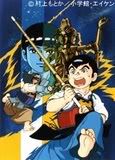
This was an anime series that I have wanted to see for quite some time. After being barred from purchasing it due to it's prohibitively expensive $500 price tag for the whole series for several years, I finally was giving the opportunity to get it at 6% of the previous price at $30 for the entire series. Well, was it worth the wait? Should I have paid the original $500 for the series? Read below to find out.
For the uninitiated, Musashi no Ken is a Kendo-themed anime about a boy, named Musashi (a play on kanji for his birthday of June, 3rd at 4pm), who is involved with Kendo from birth to adolescence. The series is divided into two parts, the first being from birth to the end of elementary school and the second being his high school years. In each part, Musashi is faced with the ordinary challenges of school life, as well as the challenges brought forth by the martial art of Kendo.
I believe the first part was the best part. There was a lot of character development involved with the main character as he grows from an arrogant kid and learns what Kendo really is about. It really kept the story moving along nicely for the 43 episodes or so that the series lasts. The second part gets a bit more philosophical and outlandish at the same time. While kenshi (people who practice Kendo) might get some appreciation out of this aspect, at the same time, some of the outlandish practices kind of ruin the feeling at times (training on cliffs, for example).
The animation is your standard 80s anime fare, which most definately improved from the first few episodes. But if you're expecting very crisp animation ala the Gundam series that was out at about the same time, you will be dissappointed. It's not terrible, but it does its job.
Overall, this is pretty much as true of a representation of Kendo that one can get in an anime. There is a lot of the philosophy behing kendo in here along with the action sequences with the shiai (fights) and drama between the characters and what they believe Kendo should be.
So who is this anime for? Well, the most important thing to say is that it's only available in Japanese. At most, you can get Chinese subtitles, but if you know neither language, then you are out of luck. I would say that it's worth a look if you practice Kendo or are interested in it, since these kinds of people would be the ones that understand the most out of it. One thing to note is that the anime follows very closely to the manga, so if you already read it (which I believe is the better version), then you are only missing the motions that are going on in between the slides. I believe that just about anyone can enjoy the series, whether or not you know about Kendo. Despite how in depth the series goes with it, there is some interesting human interaction going on between the characters and the character development of Musashi from childhood to adolescence is pretty interesting. Though, if you are into Kendo, it's pretty much a requirement if you're also into anime.
EDIT: I recently found a DVD set that was released which has English subtitles. They do get the job done, but the quality leaves much to be desired. You can tell that the people that subtitled this didn't know English because it has the quality of someone with a Japanese -> English (or Chinese -> English) dictionary and did a word-for-word translation. Even the names aren't translated right. They are either over-translated (Musashi becomes 6-3-4 or Ooishi becomes "big-stone"), used the Chinese readings or just completely uses the wrong name. If you don't believe me, the clip below shows just how bad they can get.
Really?!? Really?!?
If you want to watch a preview of the anime, I have uploaded episodes one and fifty.
Episode 1 -
Episode 50 - first episode in the second season
Here are some places you can buy it as well as preview the manga.
E-Book Japan - a site where you can buy the manga and view them on your computer. The catch is that you need to know Japanese or be patient enough to navigate the site.
- If you aren't able to navigate the previous site, you can come here to read the first chapter.
Amazon Japan - This one seems to have a version with the whole series in one book
Anime Collector - This is the only place that I know of that sells the version I bought with the English subtitles.
Episode 1 -
Episode 50 - first episode in the second season
Here are some places you can buy it as well as preview the manga.
E-Book Japan - a site where you can buy the manga and view them on your computer. The catch is that you need to know Japanese or be patient enough to navigate the site.
- If you aren't able to navigate the previous site, you can come here to read the first chapter.
Amazon Japan - This one seems to have a version with the whole series in one book
Anime Collector - This is the only place that I know of that sells the version I bought with the English subtitles.
Sunday, August 02, 2009
今朝は居合道の授業は何人いましたか? (How many people were at Iaido class this morning?)
I only ask that question because today's class was larger than normal for a Sunday morning practice (Iaido starts at 8 AM). Usually, we have about three people show up for the Iaido portion on Sundays with another one that only shows up for Kendo at 9:30. But this time there was eight including two new people and three others that don't show up on a regular basis. It's really unusual to have this many, especially for an iaido practice. But hey, I can only sing praises for it as it really allowed for quite a different atmosphere as opposed to a normal day.
Anywho, for today's class, one of the instructors took the two beginners to one side to work with them, and the other instructor took three others and me to work on shi-ho giri, or the four-directional cut. This was kind of convenient because I was sort of working on this kata a little bit before practice began. What I was working with at that time was the fact that I could hear the iaito cutting inside the saya just before I pull the iaito out to stab the person who is behind me. During the instruction period, we were told that we should make sure the iaito is pulled out of the saya up to about the tip, which is when the rotation of the body takes over to pull the saya the rest of the way. I tried chewing on that for the many repititions we did with one successful attempt out of the five to ten that we did that session.
I have no complaints of the Kendo portion either. There was just as many people that showed up for that half of the class as did the iaido portion. Despite two people having to leave early, they were replaced by one of the regulars and a visiting go-dan (fifth dan) from Louisville who recently got back from Brazil. Since it was the first practice of the month, we started off with Kata. There was an issue that we all had with the seventh kendo kata at that last step. We really weren't entirely sure if the uchidachi needs to take an additional suriashi step back or if it's not necessary. This was cleared up thanks to the visiting sensei as he was telling us that all we needed to do was step back with the left to get in the correct position before we begin the motion to reset. I'm not really sure why, but I have heard multiple versions of this particular kata. My main goal is to know the version that is most accepted and allows me to pass the exam whenever the time comes.
We didn't have as much time left for general practice due to the kata portion but, per the instruction of the visiting sensei, we certainly made the best of it. It also helped a little that we were able to stay a little later than the posted time. We are in a dance studio where they may or may not hold classes immediately afterwards which, in this case, they didn't come in. This extra time gave us the opportunity for everyone to fight with everyone.
There are two things that I wanted to accomplish here. First, I wanted to stop with the hesitating. There is this concept called sutemi that I have written about before that I would like to employ a bit better. The few times that I have been able to do it, I've been faster and more accurate since my attention is on the strike itself and not the many things that could go wrong. Second, I wanted to keep control of myself in a match. There are times where I can easily modify my fighting to keep the tempo up with the person I'm fighting against, or I might get overly excited and attack. What I want to do is be the one to set the pace of the match so I can do what I want to do and do it well. I wasn't all that successful in it, as I eventually reverted to my old ways. Speed, dexterity and strength are great things to have in a Kendo match, but they can only get me so far. When I feel I can impose my presense on the opponent and truely gain control of the situation, then I think I can gain the kind of victory that I am seeking.
There have been times when the attendance of Kendo and Iaido have been larger than usual, but these are usually anomalies due to a number or circumstances instead of being the norm. Despite that, it's very refreshing to know that there is a market for Kendo and Iaido for it to continue growing over the years in Cincinnati. Was Sunday's attendance a sign of Jim's hard work paying off or is it just the planets lining up? Only time will tell over the next few weeks, but I really hope the former scenario is the case.
Anywho, for today's class, one of the instructors took the two beginners to one side to work with them, and the other instructor took three others and me to work on shi-ho giri, or the four-directional cut. This was kind of convenient because I was sort of working on this kata a little bit before practice began. What I was working with at that time was the fact that I could hear the iaito cutting inside the saya just before I pull the iaito out to stab the person who is behind me. During the instruction period, we were told that we should make sure the iaito is pulled out of the saya up to about the tip, which is when the rotation of the body takes over to pull the saya the rest of the way. I tried chewing on that for the many repititions we did with one successful attempt out of the five to ten that we did that session.
I have no complaints of the Kendo portion either. There was just as many people that showed up for that half of the class as did the iaido portion. Despite two people having to leave early, they were replaced by one of the regulars and a visiting go-dan (fifth dan) from Louisville who recently got back from Brazil. Since it was the first practice of the month, we started off with Kata. There was an issue that we all had with the seventh kendo kata at that last step. We really weren't entirely sure if the uchidachi needs to take an additional suriashi step back or if it's not necessary. This was cleared up thanks to the visiting sensei as he was telling us that all we needed to do was step back with the left to get in the correct position before we begin the motion to reset. I'm not really sure why, but I have heard multiple versions of this particular kata. My main goal is to know the version that is most accepted and allows me to pass the exam whenever the time comes.
We didn't have as much time left for general practice due to the kata portion but, per the instruction of the visiting sensei, we certainly made the best of it. It also helped a little that we were able to stay a little later than the posted time. We are in a dance studio where they may or may not hold classes immediately afterwards which, in this case, they didn't come in. This extra time gave us the opportunity for everyone to fight with everyone.
There are two things that I wanted to accomplish here. First, I wanted to stop with the hesitating. There is this concept called sutemi that I have written about before that I would like to employ a bit better. The few times that I have been able to do it, I've been faster and more accurate since my attention is on the strike itself and not the many things that could go wrong. Second, I wanted to keep control of myself in a match. There are times where I can easily modify my fighting to keep the tempo up with the person I'm fighting against, or I might get overly excited and attack. What I want to do is be the one to set the pace of the match so I can do what I want to do and do it well. I wasn't all that successful in it, as I eventually reverted to my old ways. Speed, dexterity and strength are great things to have in a Kendo match, but they can only get me so far. When I feel I can impose my presense on the opponent and truely gain control of the situation, then I think I can gain the kind of victory that I am seeking.
There have been times when the attendance of Kendo and Iaido have been larger than usual, but these are usually anomalies due to a number or circumstances instead of being the norm. Despite that, it's very refreshing to know that there is a market for Kendo and Iaido for it to continue growing over the years in Cincinnati. Was Sunday's attendance a sign of Jim's hard work paying off or is it just the planets lining up? Only time will tell over the next few weeks, but I really hope the former scenario is the case.
Monday, July 20, 2009
AUSKF Kendo Summer Camp 2009, Daiseikou!

I had the great fortune of attending the All United States Kendo Federation Summer Camp this year in Millington, TN, which is just outside of Memphis. Before I begin, I would like to thank the Memphis Kendo Club for making this event a success with nice facilities and great organization. The practice place was very spacious yet provided enough ventilation so things never got too bad.
The seminar was chock full of information. What I will do for the following points is describe some of the notes that I could remember and try to interpret what they mean to me based on my skill level.
- Both the attacker and reciever should have an active role in training. The attacker is taking the role of the student by trying to execute the technique at hand as best as he or she possibly can. But the receiver shouldn't be too lax in taking hits either. The receiver's role is that of the teacher and should try to make the situation as realistic as he or she possibly can. If the receiver just lazily accepts techniques without any application, the attacker is just parroting the technique without getting much of a sense of how things are supposed to work. One good example would be debana-waza. The receiver, which is initiating the attack, should really attempt to go for the kote despite knowing that the attacker is most likely going to block. Not doing this correctly will result in neither knowing how the technique is applied.
- There are three parts to learning a technique: learn, practice and apply. The first part is just getting to know the technique with just the mechanical aspects. Using men as an example, this would be where all you are doing is developing muscle memory of the upswing and downswing to hit the target. The second part is practicing the technique. Once you gain the muscle memory, it is now time to refine that men so that the posture is correct from beginning to end and the right muscles are being applied to execute the swing itself. The final step, application, is where you learn how to apply what you have learned and explore how everything is supposed to work. So here, you would try to find out the best timing, how big or small the strike should be and how strong things should be to successfully achieve yukou-datotsu.
- Suburi should be treated as more than just warm ups for the main event. Oftentimes, we do the suburi to just warm the muscles up to segway into kihon geiko. But the various men strikes and suburi all have uses in shinsa and shiai, so just rushing through them is only a waste of time and encourages bad habits to form. During the seminar, this was applied by doing 100 matawari (crouching men) suburi, shomen suburi, naname suburi (the ones with hiraki-ashi) and haya-suburi (10 sets of 10 suburi).
- A person should not easily proclaim to be the teacher, but then they also shouldn't easily become a student. I think that this is supposed to mean that one shouldn't be too boastful about taking the leading position but, at the same time, one shouldn't just immediately put put yourself down into a smaller role. Everyone in the dojo needs to work together to improve in the dojo and that means that we shouldn't be too concerned with the overall role in the dojo.
- "You need to have a conversation with the shinai, don't argue with it." The shinai is supposed to be an extension of my body instead of just an extra appendage. Trying to force the shinai to do what I want to do isn't as effective as moving my body and extending my ki to move in harmony with the shinai.
- I need to concentrate on making all my hits count or I'm just wasting energy. As Matsuura sensei put it, just making random hits against an experienced person will just make them think about how to dispose of me instead of considering me a force to be reckoned with. I think this was probably the best personal advice given to me in terms of how he said it though.
- Ma-ai is still an issue for me. I tend to not really pay all that much attention to the effects of being too close or too far. Whenever I move in to try to get into a comfortable position, I don't need to move in so far. I pretty much just need to maintain issoku ittou no ma but getting myself to the point where I can prepare for an attack or parry.
- This one was for the kata portion, but I need to hold the bokken tip a little higher than chuudan no kamae. The purpose is so that I can threaten with the blade instead of just the tip when using a shinai. This is one thing that hasn't been told to me very often until about a few months ago, so I don't really know just how widespread that sort of knowledge it is. But the explanation does make sense since the bokken is a better sword facimile than a shinai where the tip is more imposing than the "blade" portion.
On a side note, I did take a few photos of the seminar. They mostly consist of the shinsa since that was the one thing I did not participate in, but I tried to do the best with what I had and tried to learn a bit about photography.
Sunday, June 28, 2009
Is It Just Me, Or Is It Hot In Here?
The main academic school year for the University of Cincinnati is over, so we can’t use the room we normally practice in, unless we plan on paying a large amount of money. The good news is that everyone will just assimilate with the Northern Kentucky Kendo Club (NKKC) for the time being until the year starts up again sometime in September.
Earlier this year, the NKKC has been practicing at the Corryville Recreational Center, and had access to a pretty nice room with good floors and a mirror along the wall. That provided some good advantages of being able to look at ourselves while doing Iaido and Kendo practice. But now that its summer and the programs at the center changed, we got moved to the gymnasium. The good news is that we now have a lot of space to handle the additional people. The bad news is that there is hardly any ventilation available.
We have been there for two weeks, but it has only been until this last practice that we really felt the effects of the lack of ventilation and air conditioning. There are two fans there, but the room is so big, that it only provides a small temperature drop if used all day, but not enough room to circulate the air, which can be a big problem when wearing bogu (and even without). At the end of the last practice, it was hotter inside the gym than it was outside the building. To put that in perspective, the thermometer, according to My 64 (TV station in the Cincinnati, Ohio area), the outside temperature was 89 degrees. So that makes the air in the gym in the 90s and our bodies feeling much hotter temperatures when wearing the dogi, hakama and bogu to restrict any kind of heat loss.
As noted by everybody, it is quite taxing on everyone there. During the kakari-geiko and jigeiko moments, my body was literally burning up, and I was doing all I could to not get physically and mentally defeated by that. I know that we will all do our best to see this through to the end. One advantage we have now is that we know what the conditions are like so we can better prepare ourselves before each practice.
Of course, this is also a perfect time to think about the well-being of everyone in the club and people who end up practicing in these sorts of conditions. The first step that needs to be taken is to drink LOTS of water before practice. I remember hearing that 30 minutes to an hour is the best to let your body absorb the water and prevent cramps due to having too much stuff in your stomach. This should allow us to perspire and provide any cooling that nature can provide and keep our bodies running despite the harsh conditions. Most importantly, we need to pay attention to ourselves and know when to stop. We all know that we must push ourselves as far as we can go, but the moment that dizziness and headaches start to set in, it might be time to sit out for the rest of the practice. As I always say, it’s better to stop to fight another day, than to keep going and be out for an extended period of time, or possibly forever.
As I mentioned before, I know that we can all get through this, despite the huge changes in practice conditions. As long as we take ample care of ourselves before, during and after practice, there isn’t much to worry about. Though, to be honest, I’m pretty excited about this because I get a new challenge to face. Or it just might be my masochistic side coming out…whatever.
Earlier this year, the NKKC has been practicing at the Corryville Recreational Center, and had access to a pretty nice room with good floors and a mirror along the wall. That provided some good advantages of being able to look at ourselves while doing Iaido and Kendo practice. But now that its summer and the programs at the center changed, we got moved to the gymnasium. The good news is that we now have a lot of space to handle the additional people. The bad news is that there is hardly any ventilation available.
We have been there for two weeks, but it has only been until this last practice that we really felt the effects of the lack of ventilation and air conditioning. There are two fans there, but the room is so big, that it only provides a small temperature drop if used all day, but not enough room to circulate the air, which can be a big problem when wearing bogu (and even without). At the end of the last practice, it was hotter inside the gym than it was outside the building. To put that in perspective, the thermometer, according to My 64 (TV station in the Cincinnati, Ohio area), the outside temperature was 89 degrees. So that makes the air in the gym in the 90s and our bodies feeling much hotter temperatures when wearing the dogi, hakama and bogu to restrict any kind of heat loss.
As noted by everybody, it is quite taxing on everyone there. During the kakari-geiko and jigeiko moments, my body was literally burning up, and I was doing all I could to not get physically and mentally defeated by that. I know that we will all do our best to see this through to the end. One advantage we have now is that we know what the conditions are like so we can better prepare ourselves before each practice.
Of course, this is also a perfect time to think about the well-being of everyone in the club and people who end up practicing in these sorts of conditions. The first step that needs to be taken is to drink LOTS of water before practice. I remember hearing that 30 minutes to an hour is the best to let your body absorb the water and prevent cramps due to having too much stuff in your stomach. This should allow us to perspire and provide any cooling that nature can provide and keep our bodies running despite the harsh conditions. Most importantly, we need to pay attention to ourselves and know when to stop. We all know that we must push ourselves as far as we can go, but the moment that dizziness and headaches start to set in, it might be time to sit out for the rest of the practice. As I always say, it’s better to stop to fight another day, than to keep going and be out for an extended period of time, or possibly forever.
As I mentioned before, I know that we can all get through this, despite the huge changes in practice conditions. As long as we take ample care of ourselves before, during and after practice, there isn’t much to worry about. Though, to be honest, I’m pretty excited about this because I get a new challenge to face. Or it just might be my masochistic side coming out…whatever.
Saturday, June 20, 2009
What is Seme?
For the past couple of months, Morikawa sensei has told me that I need to apply more seme to my fighting. He told me that whenever I fight him, he doesn’t feel any pressure coming from me. Throughout that time, I have been trying to apply what he has been telling me, but I still get the same piece of advice. Seeing as I obviously don’t quite get it, I decided to do a little research on what seme is, which should hopefully help me in achieving this goal. My intention was to ask Morikawa sensei for some more info on what he was talking about as well as a small section that explains what seme is in book Kendo Joutatsu Book by Inoue Hidekatsu sensei (剣道上達Book by 井上秀克). I’m not exactly fluent in the Japanese language, so I apologize in any sort of mistranslations that may occur.
The English definition of seme (攻め) is “attack.” The particular application of seme that I am looking for is much deeper than just the literal translation. Sometimes, the word may be used to tell the someone to attack more or be more forceful in tournaments, but the question is, “How is this supposed to be applied?”
After that practice, Morikawa sensei explained to me that I needed to move around, whether it be left, right, front or back. My shinai also has a small role in this by not only getting the center, but moving that around in various ways to see what reaction you can get out of your opponent. I have been trying to implement this recently, but I haven’t been getting the results I like from it. I need to be more prepared to react to anything that I see, which requires better reaction time and more immediate start-up.
After thinking about that for a bit, now it is time to take a look and see what Inoue sensei’s book says to get any additional information or confirm anything that I either heard or thought about. The section on seme starts off by explaining the general flow of events:
As explained above, when applying pressure, you need to look out for any reactions your opponent is making. Anyone that has some sort of experience with fighting might be able to look back on some to the common ways that people defend themselves (I know I am guilty of this as well). Sometimes, there might be a slight shift of the shinai or defense of the men by lifting the shinai over your head. Then there are the other times where they might feel forced to attack before they’re ready. Once you see these reactions, it is your job to react to it.
Near the end of the section, the book mentions that a common train of thought is to think that seme only involves trying to fight for the center. My translation skills get a little hazy around this point, unfortunately, but it mentions things about how the opponent will also be fighting for the center and a lot of missed chances. I do understand where he’s going with this though, because I can definitely see it in my Kendo. Only grabbing the center is part of it, but if the opponent is also fully aware of what’s going on and totally unphased, then any attack will be useless and I would be completely unprepared to react to the situation due to a limited field of vision.
From the little research I have done, I feel I have a better grasp of what seme is. It involves more of the entire body and mind than I originally thought since I was one of those people that originally thought that seme was just trying to get the center before you attack. Of course, understanding and doing are two completely different things. While I could ask everyone what seme is, from the looks of it, I really just need to see what works in terms of the opponent I am against and my own disposition. One thing that I do know is that I have felt the effects of seme, so now it is time for me to work on dishing it out.
The English definition of seme (攻め) is “attack.” The particular application of seme that I am looking for is much deeper than just the literal translation. Sometimes, the word may be used to tell the someone to attack more or be more forceful in tournaments, but the question is, “How is this supposed to be applied?”
After that practice, Morikawa sensei explained to me that I needed to move around, whether it be left, right, front or back. My shinai also has a small role in this by not only getting the center, but moving that around in various ways to see what reaction you can get out of your opponent. I have been trying to implement this recently, but I haven’t been getting the results I like from it. I need to be more prepared to react to anything that I see, which requires better reaction time and more immediate start-up.
After thinking about that for a bit, now it is time to take a look and see what Inoue sensei’s book says to get any additional information or confirm anything that I either heard or thought about. The section on seme starts off by explaining the general flow of events:
- Semeru – put pressure on the opponent
- Tameru – hold in your energy to prepare yourself to strike at any moment. Here, you try to feel your opponent’s reactions.
- Kuzusu – Look for an opening. Once you see an opening, attack!
As explained above, when applying pressure, you need to look out for any reactions your opponent is making. Anyone that has some sort of experience with fighting might be able to look back on some to the common ways that people defend themselves (I know I am guilty of this as well). Sometimes, there might be a slight shift of the shinai or defense of the men by lifting the shinai over your head. Then there are the other times where they might feel forced to attack before they’re ready. Once you see these reactions, it is your job to react to it.
Near the end of the section, the book mentions that a common train of thought is to think that seme only involves trying to fight for the center. My translation skills get a little hazy around this point, unfortunately, but it mentions things about how the opponent will also be fighting for the center and a lot of missed chances. I do understand where he’s going with this though, because I can definitely see it in my Kendo. Only grabbing the center is part of it, but if the opponent is also fully aware of what’s going on and totally unphased, then any attack will be useless and I would be completely unprepared to react to the situation due to a limited field of vision.
From the little research I have done, I feel I have a better grasp of what seme is. It involves more of the entire body and mind than I originally thought since I was one of those people that originally thought that seme was just trying to get the center before you attack. Of course, understanding and doing are two completely different things. While I could ask everyone what seme is, from the looks of it, I really just need to see what works in terms of the opponent I am against and my own disposition. One thing that I do know is that I have felt the effects of seme, so now it is time for me to work on dishing it out.
Thursday, June 04, 2009
ECUSKF Joint Practice (May 31st)
The ECUSKF held their joint practice in Columbus this past Sunday. Unfortunately, this was a pretty small one compared to some of the others I’ve been to, but it was no less beneficial to my Kendo to train with people from all over the area (mainly Kentucky, Ohio and West Virginia).
There was a kata session added to the beginning of the practice. There isn’t anything too formal with it since we just grabbed the nearest person and went through the kata and got suggestions from the senior members.
I will admit that my kata abilities were quite rusty since it has been a while since I have done them (the non-cooperating floor didn’t help matters either). I did get some much-appreciated help on them though. The biggest thing that I needed to fix was the overall thought process during kata. I was just going through the movements and not putting much feeling behind it. Granted, I was just trying to get used to doing kata again, but I also need to realize that there is supposed to be a story and purpose to each of them and it’s up to me to be able to interpret and display that when I do them if I ever hope to understand Kendo better. This tip also got me thinking about the overall perception of what kata means to kenshi.
One thing that seems to be apparent is that kata isn’t practiced all that often, or it isn’t given that much importance until the weeks approaching promotional exams. It’s easy to see why though. Kihon-geiko and jigeiko is much more active. Rigorous practice involving these give the most apparent results through better reaction times and tournament victories. Thus, setting some time on the side for kata may be seen as a burden since the benefits aren’t really seen immediately and tends to be treated as another obstacle to getting that next rank.
Things got a bit more interesting once I started to analyze what each of the kata are supposed to represent. Instead of just robotically going through each of the moves, it became an exercise in timing and dynamic body movement. So essentially, the thought process had to shift from, “I gotta move to the left,” to, “I need to dodge the person’s cut.” I would like to be able to put more focus on kata to help me permanently think in this manner. As it stands, I only do kata once a month, at best.
The second part was the normal practice where we stretched, did warm-ups and did some kihon-geiko. Going through the suburi and ashi-sabaki can be just as important as the rest of practice as it’s easier for me to break down my swings and footwork to see what needs to be fixed. There were two suggestions that I was given. The first one is that my feet were crossing during suriashi. While I had the speed, the balance and effectiveness is gone once my feet are crossing since, at that point, there’s very little I can do if someone is able to take advantage of that sort of situation. The second piece of advice I was given was that I needed to use more of my left during the upswing. Not only does it open up my elbows for easier swinging, it also serves as another piece of advice for those that may have the same issue as me.
My goal for this practice was to put more emphasis on tame and sutemi. I tend to either be too relaxed during matches, which slows down my reaction time, or I might end up being too tense which slows down my overall movements. And the fact that I tend to be too preoccupied with the results of my attempts ends up putting unnecessary doubt during times I could be taking advantage of the situation. I felt that it worked to my advantage during this segment, though my timing could use a lot of work for oji-waza.
I did my best to keep a similar thought process during the free practice with the sempai and sensei. Of course, when the opponent is moving and actually trying to take advantage of your deficiencies, things become much easier said than done. I was trying to apply some pressure to the other person for my first match, but it mostly was done in vain. No matter what I did or how hard I tried, the pressure was being put on me and I was the person losing control of the match. Despite all that, I still tried to make sure I was prepared for any moment I saw. When that match was over, he suggested that I needed to try to put more focus on my own kendo instead of what the other person is capable of. It makes sense though. Worrying about the other person only slows me down and causes me to not go for some otherwise good opportunities.
There were a few other matches I had that day in which I was trying to keep my thought processes in check. I wouldn’t call them successful, but it was better than not attempting to apply them in the first place. Another thing that I have been working on was making sure I keep a better eye on openings, which seems to be a side-effect to applying tame. It actually worked out with one of my hiki-dous since the sempai I was going against thought it was good enough and the sensei that was watching said that it was the best one he’s seen me do. I really appreciated that since I have been trying to be more effective with hiki-waza, though now the issue is actually being able to reproduce everything that went into that.
After the practice was over, I got some suggestions from the sensei. The two main things that I recall, was that I still had an issue of leaning into my strikes before I go. Not only does it put me off balance, but it also telegraphs to the other person that I am about to do something. I really need to do a better job with using my lower body to move forward instead of using my upper body to reach further. The second tip dealt with better use of seme. This has actually been a problem of mine for quite some time, and he has been reminding me of it since then. From his definition, I need to try to have better command of the center before I attack. While I try to keep this in mind, I guess I don’t fully understand what it really means to apply seme. I do recall there being a section in Kendou Joutatsu Book (剣道上達Book) by Hidekatsu Inoue, so I think I’ll do some consulting with that to get a better idea on what this seme is all about. Now if it only was written in English, it wouldn’t seem like such a daunting task.
There was a kata session added to the beginning of the practice. There isn’t anything too formal with it since we just grabbed the nearest person and went through the kata and got suggestions from the senior members.
I will admit that my kata abilities were quite rusty since it has been a while since I have done them (the non-cooperating floor didn’t help matters either). I did get some much-appreciated help on them though. The biggest thing that I needed to fix was the overall thought process during kata. I was just going through the movements and not putting much feeling behind it. Granted, I was just trying to get used to doing kata again, but I also need to realize that there is supposed to be a story and purpose to each of them and it’s up to me to be able to interpret and display that when I do them if I ever hope to understand Kendo better. This tip also got me thinking about the overall perception of what kata means to kenshi.
One thing that seems to be apparent is that kata isn’t practiced all that often, or it isn’t given that much importance until the weeks approaching promotional exams. It’s easy to see why though. Kihon-geiko and jigeiko is much more active. Rigorous practice involving these give the most apparent results through better reaction times and tournament victories. Thus, setting some time on the side for kata may be seen as a burden since the benefits aren’t really seen immediately and tends to be treated as another obstacle to getting that next rank.
Things got a bit more interesting once I started to analyze what each of the kata are supposed to represent. Instead of just robotically going through each of the moves, it became an exercise in timing and dynamic body movement. So essentially, the thought process had to shift from, “I gotta move to the left,” to, “I need to dodge the person’s cut.” I would like to be able to put more focus on kata to help me permanently think in this manner. As it stands, I only do kata once a month, at best.
The second part was the normal practice where we stretched, did warm-ups and did some kihon-geiko. Going through the suburi and ashi-sabaki can be just as important as the rest of practice as it’s easier for me to break down my swings and footwork to see what needs to be fixed. There were two suggestions that I was given. The first one is that my feet were crossing during suriashi. While I had the speed, the balance and effectiveness is gone once my feet are crossing since, at that point, there’s very little I can do if someone is able to take advantage of that sort of situation. The second piece of advice I was given was that I needed to use more of my left during the upswing. Not only does it open up my elbows for easier swinging, it also serves as another piece of advice for those that may have the same issue as me.
My goal for this practice was to put more emphasis on tame and sutemi. I tend to either be too relaxed during matches, which slows down my reaction time, or I might end up being too tense which slows down my overall movements. And the fact that I tend to be too preoccupied with the results of my attempts ends up putting unnecessary doubt during times I could be taking advantage of the situation. I felt that it worked to my advantage during this segment, though my timing could use a lot of work for oji-waza.
I did my best to keep a similar thought process during the free practice with the sempai and sensei. Of course, when the opponent is moving and actually trying to take advantage of your deficiencies, things become much easier said than done. I was trying to apply some pressure to the other person for my first match, but it mostly was done in vain. No matter what I did or how hard I tried, the pressure was being put on me and I was the person losing control of the match. Despite all that, I still tried to make sure I was prepared for any moment I saw. When that match was over, he suggested that I needed to try to put more focus on my own kendo instead of what the other person is capable of. It makes sense though. Worrying about the other person only slows me down and causes me to not go for some otherwise good opportunities.
There were a few other matches I had that day in which I was trying to keep my thought processes in check. I wouldn’t call them successful, but it was better than not attempting to apply them in the first place. Another thing that I have been working on was making sure I keep a better eye on openings, which seems to be a side-effect to applying tame. It actually worked out with one of my hiki-dous since the sempai I was going against thought it was good enough and the sensei that was watching said that it was the best one he’s seen me do. I really appreciated that since I have been trying to be more effective with hiki-waza, though now the issue is actually being able to reproduce everything that went into that.
After the practice was over, I got some suggestions from the sensei. The two main things that I recall, was that I still had an issue of leaning into my strikes before I go. Not only does it put me off balance, but it also telegraphs to the other person that I am about to do something. I really need to do a better job with using my lower body to move forward instead of using my upper body to reach further. The second tip dealt with better use of seme. This has actually been a problem of mine for quite some time, and he has been reminding me of it since then. From his definition, I need to try to have better command of the center before I attack. While I try to keep this in mind, I guess I don’t fully understand what it really means to apply seme. I do recall there being a section in Kendou Joutatsu Book (剣道上達Book) by Hidekatsu Inoue, so I think I’ll do some consulting with that to get a better idea on what this seme is all about. Now if it only was written in English, it wouldn’t seem like such a daunting task.
Saturday, May 30, 2009
Kendo, by Tim O'Shei

Book Title: Kendo
Author: Tim O'Shei
ISBN 13: 978-1-4296-1964-6
ISBN 10: 1-4296-1964-3
Description as shown on the back of the book
The sword skills of the samurai come to life as kendo fighters execute fast-acting blocks and strikes to win competitions. Learn how fighters practice their skills and see if you have what it takes to be a kendo champion.
Review
As many of you may already know, there aren’t very many resources for Kendo for the English-speaking crowd. The ones that are available have varying degrees of usefulness, but one demographic that seems to be missing is material for the younger crowd. The book that I am reviewing here is supposed to be one such book that caters to that demographic.
My first review is a book titled, “Kendo,” by Tim O’Shei. To be honest, I was thinking the book would be a bit more on the meaty side after seeing it at the online library catalog, but I decided to take a look anyways and give it a chance.
The book itself is only 32 pages long with a few sentences gracing each page, explaining some very basic information about what kenshi wear during practice, the equipment that they use and some information about kata, testing and general practice structure. There are color photos included on each page and, along with the short description on some kendo material, they have some "fun facts" that may or may not be interesting. The author consulted David Christman Sensei, founder of Battle Creek Kendo Kai for the information contained in the book.
The book would really only cater to young children who are totally unfamiliar with Kendo. The ones of that age group that already do Kendo would already be familiar with the material in the book. Other than that, I do appreciate the extra information out there that gives everything in a simple manner to expand knowledge to a younger age group. I also like the various color pictures that show the equipment and people practicing.
Tuesday, May 26, 2009
Using a Real Sword
It's been a minute since I typed something here, but I was on vacation over the past few days, which also gave me the time to think of something to type here upon my return.
I'll admit it here that I did not get to use a shinken, but at Iaido practice last Wednesday, I was told to try to constantly imagine that I am using one in order to fix my noto. Upon doing so, my sensei told me that my noto immediately improved upon doing so.
I was trying to use that mindset before, but it really wasn't as strong as I applied it here. At first, it was just something that I kept at the back of my mind and just made note when my hand would have gotten cut. This time, I tried to apply it as a preventative measure which caused my noto to feel more controled.
This is something that I should really try to keep doing because, while I am definately several years off with getting to the level of using a shinken, I will get to that point eventually and it's imperative to have some practice to avoid bad accidents in the future.
I'll admit it here that I did not get to use a shinken, but at Iaido practice last Wednesday, I was told to try to constantly imagine that I am using one in order to fix my noto. Upon doing so, my sensei told me that my noto immediately improved upon doing so.
I was trying to use that mindset before, but it really wasn't as strong as I applied it here. At first, it was just something that I kept at the back of my mind and just made note when my hand would have gotten cut. This time, I tried to apply it as a preventative measure which caused my noto to feel more controled.
This is something that I should really try to keep doing because, while I am definately several years off with getting to the level of using a shinken, I will get to that point eventually and it's imperative to have some practice to avoid bad accidents in the future.
Friday, May 15, 2009
Increasing Speed and Accuracy
 After a pretty crazy week with work last week, I was able to find the time to get some action on with Kendo and Iaido.
Unfortunately, I wasn't able to do Iaido for long this week since I was stuck in traffic on my way there. All we did this week was spend some time over nukitsuke and noto. The problem with my nukitsuke is that I tend to try to cut before the iaito is out of the saya. For the noto, it's all about the hand positioning to increase accuracy of getting the iaito back in the saya while making sure I'm in the position to strike again at a moment's notice.
On something kinda unrelated, there has been an increase in beginners at practice which really makes me happy. I can only hope that they find out that Kendo is something that they really like and end up sticking with it. Of course, all we can do is instruct and give advice when needed and let everyone decide for themselves. No matter the end result, I like the additional people.
Tuesday's practice was pretty standard fare with Takano sensei with the general hard work. Thursday's practice was more exciting since Morikawa sensei came down from Dayton to train with us. He led the practice in typical Dayton fare which involved nearly constant movement that can have just about anyone writhing in exhaustion near the end.
Over the past week, there were two things that I have learned about my Kendo based on the advice given by Takano sensei and Morikawa sensei.
The first piece of advice from Takano sensei is that I need to learn to keep my foot down when doing Fumikomi. When I am striking, I have a tendancy to lift my foot up a little high. The rationale behind this is that, the longer your foot is in the air, the slower your strike if your timing is correct. This isn't the first time I've heard of this sort of advice, but I do notice how hard it is to really get down, especially after not giving it much thought before.
The second piece of advice came from Morikawa sensei. He told me that I seem to hit while not fully having the center or coming off to the side when I strike, like katsugi-waza. So I need to take the center and strike from the center. I'm thinking that a lot of this is coming from me trying to do more with fighting the center which, ironically, puts me off center sometimes. I'm really trying to see how to get this right while getting the opponent to do what I want them to do.
These are two very important aspects that could help with my overall speed and accuracy. My current goal is to become more competitive in the shodan-nidan division in the next kendo tournaments and get ready for the nidan exam which can happen in the next year.
Before I go, there are two notes I'd like to mention. It is kind of late, but I did post pictures of the Cleveland tournament on Flickr, which can be found either on the side bar or just by clicking the link here. Also, I would like to do some design and name changes to the blog to make it a bit more visually appealing and hopefully be able to type better notes and articles to the point where I'm happy with it. We'll see what happens with that since I'm not that much of a web designer, but would like to pretend that I am one.
Sunday, May 10, 2009
Kendo Skill +1
I had to take a week off from Kendo to let my body heal and go through some hell at work. But I did my best to start up again as good as before. After Saturday practice in Dayton, I had a minor headache, experienced a small cramp in my left calf and some plantar fasciitis. Despite all that, I felt so alive after practice to where going through the pain during and after that was all worth it.
Ever since the tournament and after some suggestions by Ariga sensei, I have been trying my best to bring my Kendo to the next level by trying to do what I can to create openings on the opponent and getting them to move the way I want them too. This is easier said than done cause I also have to get over the personal demons that cause me to hold back and hesitate and correctly use the openings to my advantage.
I have also been trying out various other techniques to see how well they work. I seem to be belting out the Gyaku-Dou (dou strike on the left side) pretty often since after the tournament. It's nice to use, though I'd like to know the best way to score with it. I have also been trying to work with hiki-waza and all the elements that deal with that.
The main motivation for this was after participating and really paying attention to the shodan/nidan division at the Cleveland tournament. It's one thing to see people do well in certain divisions, but it's a different matter when you're trying to pay attention to everything to see what needs to be done to even have a chance at the top spots. I knew that my ikkyu kendo wouldn't be good enough, but it was great to get a perspective for what I need to do to do well.
Ever since the tournament and after some suggestions by Ariga sensei, I have been trying my best to bring my Kendo to the next level by trying to do what I can to create openings on the opponent and getting them to move the way I want them too. This is easier said than done cause I also have to get over the personal demons that cause me to hold back and hesitate and correctly use the openings to my advantage.
I have also been trying out various other techniques to see how well they work. I seem to be belting out the Gyaku-Dou (dou strike on the left side) pretty often since after the tournament. It's nice to use, though I'd like to know the best way to score with it. I have also been trying to work with hiki-waza and all the elements that deal with that.
The main motivation for this was after participating and really paying attention to the shodan/nidan division at the Cleveland tournament. It's one thing to see people do well in certain divisions, but it's a different matter when you're trying to pay attention to everything to see what needs to be done to even have a chance at the top spots. I knew that my ikkyu kendo wouldn't be good enough, but it was great to get a perspective for what I need to do to do well.

 Posts
Posts

